The people living in Pompeii in 79AD had no idea they were living next to a Volcano. They didn’t even have a word for volcano, and the earthquakes that occurred before the eruption were not recognised as the warnings that they were. Yet today the people who live and work in this area do so in the full knowledge of what vesuvius is capable of. Towns and cities sprung backup in the area due in part to the fact that minerals present in the volcanic soil make the area around vesuvius incredibly fertile. Also the hardened lava underneath is porous, meaning the area has it’s own built in natural irrigation system. Hence there has always been an abundance of food and agricultural jobs to provide for those living here. There are even varieties of grape and tomato that grow only in this area and have geographically protected status.
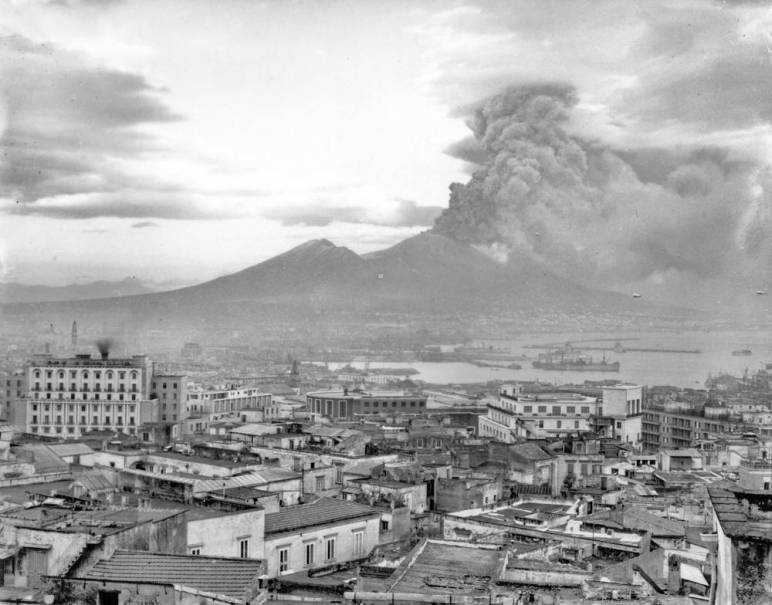
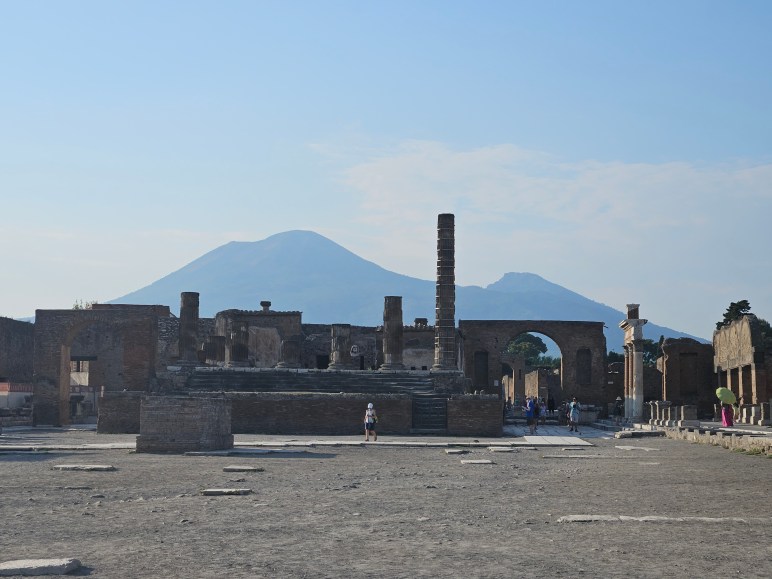
Vesuvius is still very much an active volcano. Over the last few centuries it has erupted in 1660, 1682, 1694, 1698, 1707, 1737, 1760, 1767, 1779, 1794, 1822, 1834, 1839, 1850, 1855, 1861, 1868, 1872, 1906, 1929, and lastly in 1944. With 80 years now having passed since the last eruption, volcanologists agree that vesuvius is overdue one, and after an extended break this is likely to be quite large. Yet still plenty of people go about their every day lives with the shadow of the volcano looming over them. We only stayed in Pompeii for a week, but already by the end of the stay my initial awe of vesuvius was abating. It was still a spectacular presence in every viewpoint, but it was odd that I became accustomed to the proximity of such destructive potential.
So life just goes on
In the shadow of dire might
Fear long forgotten
 Life, as I understand it