Stronger than I think

You aspired to silence me;
To still my tongue
And prevent the telling of my tale.


For a while I acquiesced,
My passion gone,
Crushed by the demands of solitude.

I lay mute and diffident
And languished long
In lethargic denial of strength.


But do not think that you have won,
Have gained your end
And doused the fire that burns within me.


For though the embers grow dim
New breath brings life,
Reigniting flames that grow once more.


My voice will be heard again
Like none before
Bursting forth, my song will carry truth


To all who have hearts open to hear.

Mask

Over the years my self-confidence has waxed and waned many a time.  I am glad to say that with the psssage of time this has happened with less frequency and mostly decreasing extremes. As time goes by I am increasingly comfortable in my own skin and less focused on what others (may or may not) think of me. After all, I am who God made me to be and I seek to embrace my identity as one of His children. I am still very much a fan of wearing makeup, but I am no longer reliant on it as a mask that allows me to face the world. This poem is one that was written at a time when my self-confidence was definitely waning.


I am not myself today
I have come out without my face.
In all the rush of this morning it was
Overlooked.
At first I was happy in my ignorance.
All it took was one look.
The fleeting question in the eye of a
casual acquaintance
Told me all was not as it usually is.
As the realisation dawned I was horrified,
and bowed my head in shame.
I had allowed someone in.
Allowed someone to see the real me
in all it’s painful colours.
And yet for that momentary flicker
I would have gone about my day
uncowed by self judgment or derisory expectations.
So my feet are getting all my attention today
as I withdraw
to ignore
this beautiful life in which I play
a reluctant part

2.12.24

Day 2 of the poetry prompt advent and the prompt is patience.

The in-between
A time of malcontent
When what is no longer amiss
Is not yet as it should be
Patience does not come naturally
The grumbles burst forth unrestrained
By manners or propriety
And annoyed by my own agitation
My hackles strain skyward

Yet still you do not respond
My unanswered pleas for conclusion
Hang unrecognised between us
The strides we made in danger of being overlooked
When still our destination is not gained

All in good time my child, all in good time.

My petulant cry –
“Now is a good time”
Dies on my lips
As I finally meet your gaze
And am engulfed in the love within.

All in good time my love, all in good time

Twisted

I have a stash of old notebooks full of thoughts and scribblings. Some pages hold just odd lines or paragraphs, some poems I have maybe just started and never finished. And some have finished poems that I have long forgotten writing, or have never shown to anyone. I can lose hours reading back through these notebooks. Sometimes I am looking for inspiration – to take a line or a half finished poem and make something of it. But also I get lost in memories. Many of my poems, especially the older ones are really just me putting my feelings down on paper. As I read them I can remember what I was doing when I wrote them, or why I was feeling a certain way. I can also see how I have changed over the years – how as I have grown my perspective has changed and my confidence grown. This poem was written at a period when I was lacking in self confidence and was a bit of a social chameleon.

I twisted myself up

I turned round and round

and got all tangled.

And then I had to unwind myself,

the other way round and round.

And when I fell on my behind

it wasn’t funny;

it hurt.

Even though I deceived you

when I sat there and laughed.

But the tears that rolled

down my reddened cheeks

were not the result of a

burst of hysteria.

My eyes all screwed up,

the tears fell from

sudden pain.

Three times

Often I will have inspiration for just a few lines of a poem. I’ll write them down and come back to them at a later date to write the whole thing. A while ago I wrote the first Stanza of this, originally about a very different matter. However when I came back to it the poem has gone in a totally different direction. So here, very different to what I intended, is the finished poem.

The first time I said no I meant it
The second I wasn’t so sure
The third time I said no I knew that
I’d bend if you asked me once more

The first time I said yes I waivered
The second I felt that I must
The third time I knew I had no choice
To say no would lose me your trust

The first time I walked out I tested
The second I still wasn’t sure
The third time I walked out I knew that
I’d never walk back through that door

The first time I felt love he meant it
The second he meant it much more
The third time 1 felt love I knew that
I’d always be scared and unsure

The first time he promised I questioned
The second I silently wept
The third time he promised I knew that
Once more and 1 might just accept

The next time he promised he held me
In earnest looked straight in my eyes
Whatever wherever whenever
He’d always be right by my side

And that time I really believed it
For once more my heart was made whole
With him by my side I have risen
And reclaimed the me that you stole

To be young

A few days ago I was having a conversation with someone about attitudes towards young people. Particularly the judgement thrown at them purely for acting like they are young and inexperienced and know less of the world. We have all been there at some point  – we all learn as we travel through life. Admittedly, some of us learn better than others, and sometimes we learn the wrong lessons altogether. But being young is not inherently a bad thing, and is something an individual has absolutely no control over!

This conversation brought to mind a poem I wrote back when I was a youth and was feeling judged for being young. It took a lot of rummaging through old notebooks but I eventually found it. Written when I was just the tender age of 16, here it is

The dying hate us
For we are still being born.
As we laugh and joke
They shake their heads in disapproval;
We are living too much for them.
They love the life they are dying,
why should we live more than they can?

They try to take our life from us
They complain to everyone
And grumble remarks as we pass.
We can do no right.
If we try to live a little bit for them,
To rejuvenate their dying breath,
They do not want to know.
Our life threatens them,
And they are untrusting and suspicious.

Their birth was so long ago,
It is forgotten,
And they cannot understand those
Who live like they’ll die tomorrow.

At the well

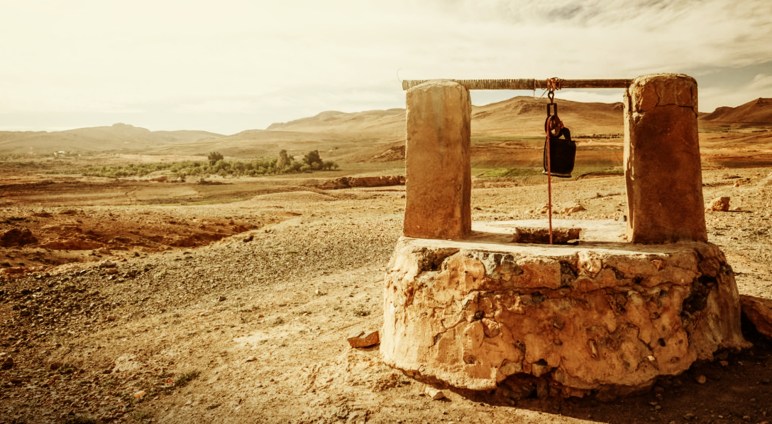
A few years ago I wrote a poem about the women in the bible who encountered Jesus. In my poetry journal today the prompt was to write a poem from the point of view of someone in a well known story. I chose the woman at the well.

He saw me.
I had come alone to draw, unseen, unjudged, from the well.
He spoke to me
Asking for a drink from one he should have ignored
He told me
That I should never thirst again – he would make it so
He revealed to me
The truth of who he was and why he came
He knew me
He knew the very worst but did not shrink from me

When previously I had felt judgement,
here I met compassion
And for the first time I felt free.
I found truth,
I found purpose,
And I felt beautiful.

At the end of the universe

When people read poetry they interpret it in their own way. I know from comments made to me about my own poetry that if I write a poem about one thing, some people will read it as being about something else entirely. And that is fine. Like any art form, people view it through the lens of their own personal life experience and preferences; it means different things to each of us. That is one of the reasons that I often write a little intro to my poems on this blog – to explain a bit about what I was thinking or feeling when I wrote the poem. But sometimes I don’t want to share that much of myself, and sometimes I just want to throw a poem out there and see how it is interpreted without any hints from me. Today’s poem is not straight forward for me to explain so I’m just going to throw it out there. Comments are encouraged!

Weep with me for the forgotten boy who lies quiet at the end of the universe.

Exiled.

Expelled with such force that he can never find his way home.

And all for a misunderstanding that can never now be explained.

So instead he lies in quiet contemplation

of the injustice of existence.

Wishing he had at least done something worthy of eternal exclusion.


At the end of the universe all is clear.

He can look back at what could have been –

The sheer potential afforded to those who so oft neglect it

chasing after instancy instead.

Oh to be once again in the opportune abundance of those at the centre.


The tears deluged once, but that stream has now run dry

Futile waters washed away no part of his pain.

His resigned heart long torn in two.

Naive and trusting he yearned at the start for a vindication that never came

Reliant on the honesty of another with naught to gain from confession

and much to lose.


So alone he waits.

All angered out

self pity over

indulgent hope abandoned

Surrounded by stardust and cosmic redundancy


Weep with me for the forgotten boy who dies quiet at the end of the universe.

 

The Quiet Place

Is it just me or does life seem to have gotten SO busy. There seems to be an endless flow of distractions and intrusions that hinder me. Recently I have been reading a book called The ruthless elimination of hurry. (Ok, I confess; listening to – I’m far too busy to sit down with a book!) The book itself is an easy read, but it asks some challenging questions about our modern lifestyle. Written by John Mark Comer, an American pastor, it is written very much from a Christian perspective but there is lots in it to speak to anyone living their life in our crazy, busy, noisy, nonstop, often overwhelming world. The chapter I read (listened to) this week is all about silence and solitude, something that few of us get enough of! After discussing it in our small group I was inspired to write this poem.

In the silence
In the stillness
Of the quiet place
I will seek you
Come towards you
Turn to me your face

I am ready
To hear from you
Speak your truth to me
I will listen
To hear from you
Words so Fatherly

In the silence
In the stillness
Of the quiet place
I will meet you
Be at peace there
Rest in your embrace

Corner

I am a dreamer. I dream often and regularly remember bits, if not all, of the fantastical tales and crazy adventures I have during slumber. The weird and wonderful worlds I inhabit whilst sleeping can be a rich source of inspiration for my writing whilst awake, and I keep a note book beside my bed to jot down anything I want to hold on to. Sometimes when I look back at them my night-time scribblings make no sense at all, but once in a while when I check my notebook I am amazed at the insight or poeticism I find there.

A few days ago I had an unusual dream, even for me. Instead of being in the dream, playing ny part, I was an observer. And as the scene played out before me it wasn’t live action it was a black and white cartoon, all rough drawn and jiggling. I can only remember a very small part of it but it was such a striking visual images that it inspired a poem.

I can see myself in the corner
In a small stark patch of light
All couched and folded inwards
In a world of black and white

The darkness that surrounds me
Is slowly pressing in
The fear of it constricts my chest
I feel it chill my skin

But flickering, and glorious
A white light comes to shine
And rages ‘gainst the darkness
In this corner small of mine

So sensing something easing
I dare to lift my head
And see the light expanding
And catch a glimpse of red

I can see me in the corner
In a growing patch of light
All couched, but less uncertain
In a world of colours bright.